In the previous article of the series “VMwareLearning. Year 2022″ we considered a list of training programs in the direction of Multi-Cloud: VMware Integrated OpenStack.
Today we will talk about the main training programs in the field Multi-Cloud: VMware vRealize Suite Lifecycle Manager.
VMware vRealize Suite Lifecycle Manager
VMware vRealize Suite Lifecycle Manager delivers complete lifecycle and content management capabilities for vRealize Suite products. It helps customers accelerate time to value by automating deployment, upgrades, and configuration, while bringing DevOps principles to the management of vRealize Suite content.
The main current training programs for VMware vRealize Suite Lifecycle Manager technologies are:
● VMware vRealize Suite Lifecycle Manager: Install, Configure, Manage [V8.0].
Duration: 2 days.
Level of difficulty: Professional.
Target audience: Administrators, Operators.
Prerequisites: Basic understanding of vRealize Suite or products such as vRealize Operations, vRealize Automation, or vRealize Log Insight.
This two-day course features hands-on training that focuses on installing, configuring, and managing VMware vRealize Suite Lifecycle Manager, which includes products such as VMware vRealize Operations, VMware vRealize Log Insight, and VMware vRealize Automation. This course prepares you to administer a vRealize infrastructure for an organization.
Brief Summary
In this short article, we got acquainted with the main training programs in the field of Multi-Cloud: VMware vRealize Suite Lifecycle Manager.
In the next publication of the cycle “VMwareLearning. Year 2022″ we will talk about training programs in the field of Multi-Cloud: VMware vRealize Automation.
Follow the news until the meeting is on air in a few days. Sincerely, AIRRA.
Greetings to all guests and readers of the IT Architecture and Education Blog.
On the air Andriy Romanenko, IT Architect and instructor.
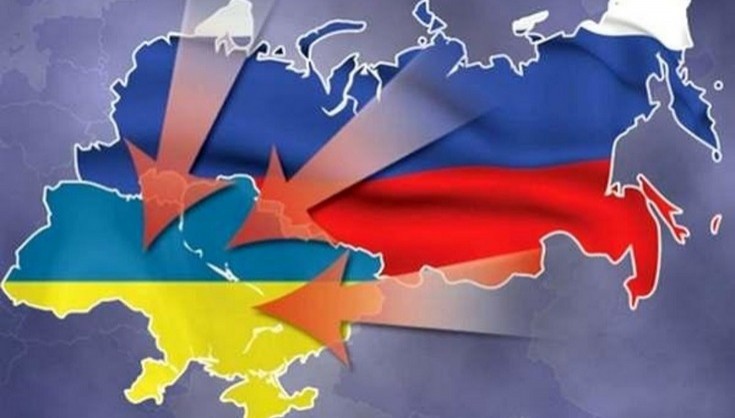
This post is not intended to be about technology, architecture or learning at all. When I registered my airra.net domain and started my own blog over twenty years ago, I could not have imagined that I would have to write about military topics. The sick imperial ambitions of the leadership of the neighboring state at the same time changed the fate of millions of Ukrainians. The country woke up early in the morning on February 24, 2022, to the explosions of rockets flying to kill peaceful Ukrainians. And columns of enemy armored vehicles have already advanced from the north, south, and east. For most Ukrainians, life is divided into BEFORE and AFTER.
This post is the beginning of fixing the chronology of the author’s consolidated thoughts for more than four months of war with the Russian invaders. And even though the calendar is now mid-July, this post will have a publication date of February 24, 2022!
Life Before and After February 24, 2022
The deadly breath of war has been in the air since the middle of last year. This was evident from publications in the mass media, the atmosphere of posts on forums on the Internet. And even on purely technological communities, messages with the theme “Kill Ukrainians!” periodically appeared. Hysteria grew. And as theatergoers say, if there is a gun hanging on the stage, it must fire at the end of the performance!
But, for the time being, the country was still living a normal life and many thought that everything would be fine. I was mentally prepared for a different course of the situation, so I began to prepare for a possible evacuation from a small town from the relocation of Kyiv to the West of the country. My wife was instructed to scan copies of all our main documents and documents for our entire extended family. The logistics of AliExpress still worked flawlessly, so a special case for documents was ordered. Diagnostics and maintenance of the car were carried out, more or less tried to keep the fuel in the tank, although here too there were planning flaws. But about that, a little later. A supply of dry food and filler for cat trays was purchased for their pets.
The Instructor’s life was quite measured, the training centers planned their activities and I, as one of the top cloud technology instructors, was booked many weeks in advance.
Russia’s attack on Ukraine
I slept very badly that night. Waking up around four o’clock, I decided to go to my office to read the Internet news. After the first reports of the invasion of Russian troops, there was great psychological anxiety. He decided not to wake up his family at the moment, but they woke up themselves from the sounds of explosions, which were very audible. Our town on the outskirts of Kyiv is near Zhulyany airport, so the rockets landed somewhere there.
There was no internal panic, a sober plan gradually matured in his head. Collect everything necessary, load things and cages with animals into the car and go west to Lviv.
The piquancy of the situation was that there was only 200 kilometers of fuel in the car’s tank, and the possibility of refueling was disappearing every minute. I had planned to refuel the next morning and was a bit late.
Within an hour, we as a whole family were ready to leave.
Evacuation to the West
We left Vyshneve around seven in the morning. Since the main highways will be extremely congested in such a situation, I decided to drive along small regional roads on P04 in the direction of Byshiv, in order to get as far as possible to the E40 highway direction Zhytomyr, Rivne, Lviv.
Slowly overcoming traffic jams on the way out of Vyshneve, we lose several hours of precious time and understand the unfortunate situation with fuel at gas stations: some of them have closed altogether, and long queues are forming at the ones that are open.
In the direction from Kyiv to the West, there is an endless flow of cars. Finally, we take the E40 highway from the country roads in the Kalynyvka area and get to the OKKO gas station. There is excitement, but fuel is still released without a limit, so within forty minutes of waiting it was possible to refuel a full tank and a 20-liter canister.
The road to Lviv was extremely difficult. Usually I overcome it in 5-6 hours. This time it was over 20. It felt like you weren’t going, just standing or crawling. They reached the suburbs of Lviv late at night.
The plans for the next day were obvious – a visit to the military commissariat. And now the dream just turned off.
Mobilization
The next day, the military commissariat received a somewhat unfriendly welcome. Stress among workers added to the chaos. Having intuitively understood the correct sequence of steps, he successfully passed the medical examination and received a mobilization certificate. As for my fifty-plus years of age, my health is excellent. Given the previous service experience, he was sent to the military unit of the corresponding profile. Arrival at the military unit was given a day, so it was necessary to properly prepare for the new realities of military service.
Anxiety was added by the fact of uncertainty as to whether my knowledge and experience would really be relevant and needed in the new conditions of reality. A visit to the military commander did not provide any answers to these questions. Let’s see what happens next…
Notes of an IT Architect and Instructor in military service
The subsequent course of events showed that the IT knowledge of an architect and an instructor can come in handy, the main thing is to be at the right time and in the right place. Later, I will publish more detailed Notes of an IT Architect and Instructor in the military service within the limits of what does not constitute a military secret. But, this is already after the Victory. Currently, short essays and some architectural sketches of the pre-war period will appear in the blog.
The blog in that form will exist for some time, and then it will be disabled for an indefinite period. Enemy shells and destruction will not reach the location of my mini Datacenter for several kilometers.
I pause at this point. I am gathering my thoughts for the next publications. I wish you health!
In the previous article of the series “VMwareLearning. Year 2022″ we considered a list of training programs in the direction of Multi-Cloud: VMware Cloud Foundation.
Today we will talk about the main training programs in the field Multi-Cloud: VMware Integrated OpenStack.
VMware Intergrated OpenStack
VMware Integrated OpenStack is a VMware-supported version of the OpenStack infrastructure that simplifies the operation of the OpenStack production environment, deployed over the existing Vmware infrastructure.
Current VMware Integrated OpenStack Technology Curriculum:
Prerequisites: This course requires the completion of the following courses:
VMware vSphere: Install, Configure, Manage;
VMware Integrated OpenStack Fundamentals;
VMware Network Virtualization Fundamentals,
Substantial knowledge of Linux administration and TCP/IP networking is helpful.
This five-day course provides you with the skills to build a private cloud using VMware Integrated OpenStack on a proven VMware software-defined data center (SDDC). Through a combination of lecture and hands-on labs, this course builds your skills in installing, configuring and managing VMware Integrated OpenStack. You will learn how to offer infrastructure as a service (IaaS) and platform as a service (PaaS) with advanced networking and security features to end users using VMware Integrated OpenStack.
Brief Summary
In this short article, we got acquainted with the main training programs in the field of Multi-Cloud: VMware Integrated OpenStack.
In the next publication of the cycle “VMwareLearning. Year 2022″ we will talk about training programs in the field of Multi-Cloud: VMware vRealize Suite Lifecycle Manager.
Follow the news until the meeting is on air in a few days. Sincerely, AIRRA.
In the previous article of the series “VMwareLearning. Year 2022″ we considered a list of training programs in the direction of Multi-Cloud: VMware Site Recovery Manager.
Today we will talk about the main training programs in the field Multi-Cloud: VMware Cloud Foundation.
VMware Cloud Foundation
VMware Cloud Foundation is the industry’s most advanced hybrid cloud platform. It provides a complete set of software-defined services for compute, storage, networking, security and cloud management to run enterprise apps—traditional or containerized —in private or public environments.
Current VMware Cloud Foundation Technology Curriculum:
● VMware Cloud Foundation: Management and Operations [V4.0]
Duration: 3 days.
Level of difficulty: Professional.
Target audience: Experienced system administrators, system integrators, and consultants responsible for implementing and managing VMware Cloud Foundation.
Prerequisites: This class requires system administration experience with VMware vSphere deployments or completion of one of the following courses:
VMware vSphere: Install, Configure, Manage;
VMware vSphere: Optimize and Scale.
This three-day course includes instruction on the capabilities of VMware Cloud Foundation™ to manage and operate hybrid and cloud infrastructures, which includes customization and management. The course explains the architecture of VMware Cloud Foundation and explains licensing, certificates, and storage and network management. The course also covers workload domains, availability, life cycle management, and troubleshooting. In general, you learn how to use and configure VMware Cloud Foundation 4.0.1
Target audience: Experienced solution architects, system integrators, and consultants responsible for designing and deploying VMware Cloud Foundation.
Prerequisites: This class requires system administration experience with VMware vSphere and VMware NSX-T Data Center deployments or completion of one of the following courses:
VMware vSphere: Install, Configure, Manage [V7];
VMware vSphere: Optimize and Scale [V7];
VMware NSX-T Data Center: Install, Configure, Manage [V3.0].
This two-day course introduces the concepts and architecture of VMware Cloud Foundation to prepare students for a successful deployment. This course explains how to design and size your infrastructure for the management components and for workload domains in preparing for VMware Cloud Foundation deployment. This course provides instruction on planning and designing the physical network, a key preparatory step for VMware Cloud Foundation. This course describes how to plan for, and execute, the VMware Cloud Foundation bring-up process and explains how to image VMware ESXi hosts for use in VMware Cloud Foundation using the VMware Imaging Appliance. Live labs provide hands-on experience to help understand key course objectives.
Target audience: System Operator, System Administrator, System Integrator.
Prerequisites: This class requires system administration experience with VMware vSphere and VMware NSX-T Data Center deployments or completion of one of the following courses:
VMware vSphere: Install, Configure, Manage;
VMware NSX-T Data Center: Install, Configure, Manage;
VMware vSAN: Management and Operations.
This five-day course includes instruction on the capabilities of VMware Cloud Foundation and how to successfully plan, deploy, manage and operate hybrid and cloud infrastructures, including customization. This course explains the architecture of VMware Cloud Foundation and explains licensing, certificates, and storage and network management. This course also covers workload domains, availability, lifecycle management, and troubleshooting.
Brief Summary
In this short article, we got acquainted with the main training programs in the field of Multi-Cloud: VMware Cloud Foundation.
In the next publication of the cycle “VMwareLearning. Year 2022″ we will talk about training programs in the field of Multi-Cloud: VMware Integrated OpenStack.
Follow the news until the meeting is on air in a few days. Sincerely, AIRRA.
In the previous article of the series “VMwareLearning. Year 2022″ we considered a list of training programs in the direction of Multi-Cloud: VMware vSAN 6.7 and 7.
Today we will talk about the main training programs in the field Multi-Cloud: VMware Site Recovery Manager.
Site Recovery Manager
VMware Site Recovery Manager (SRM) is a business continuity and disaster recovery solution for planning, testing and restoring virtual machines from a protected, primary site to a backup recovery site.
Current Site Recovery Manager Technology Curriculum only one:
● VMware Site Recovery Manager: Install, Configure, Manage [V8.2]
The course gives experienced VMware vSphere administrators the knowledge to install, configure, and manage VMware Site Recovery Manager 8.2. This course also shows how to write and test disaster recovery plans that use Site Recovery Manager.
Brief Summary
In this short article, we got acquainted with the main training programs in the field of Multi-Cloud: VMware Site Recovery Manager.
In the next publication of the cycle “VMwareLearning. Year 2022″ we will talk about training programs in the field of Multi-Cloud: VMware Cloud Foundation.
Follow the news until the meeting is on air in a few days. Sincerely, AIRRA.